Choosing the Right Visual Strategy: A Deep Dive into Infographic Templates with 6 Distinct Styles
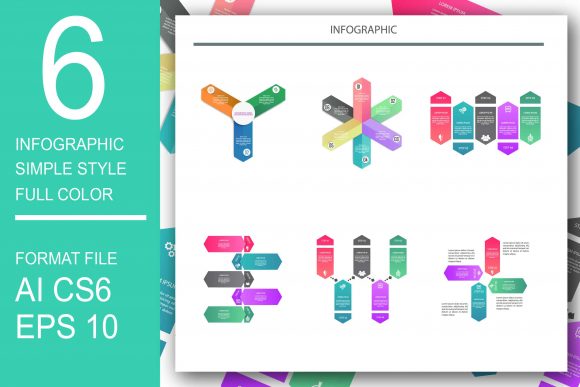
In the modern digital landscape, the ability to communicate complex data quickly and effectively is a critical skill for marketers, educators, and business professionals. When evaluating resources for visual communication, one often encounters the Infographic Template with 6 Style package. This specific type of resource offers a curated collection of six unique design aesthetics within a single download, providing versatility that single-style templates often lack. For adults navigating the crowded market of design assets, understanding the distinct value proposition of a multi-style pack versus purchasing individual themes is essential for making an informed investment.
The core distinction of this template category lies in its adaptability. Rather than committing to a single visual language—such as strictly flat design or overly detailed skeuomorphism—a six-style pack allows the user to match the tone of the infographic to the specific audience and message. Whether the goal is to present serious financial data, explain a playful consumer process, or outline a technical workflow, having six varied approaches ensures that the visual medium supports rather than distracts from the content.
Technical Foundation: The Importance of Vector Formats
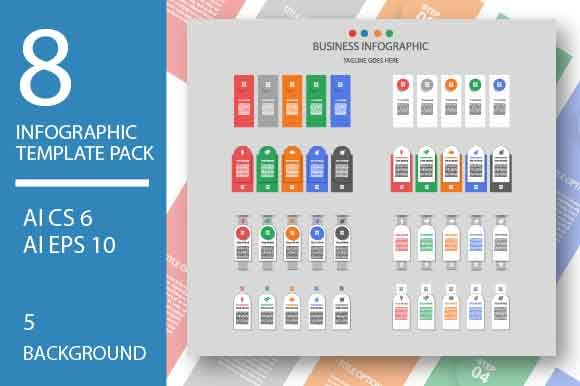
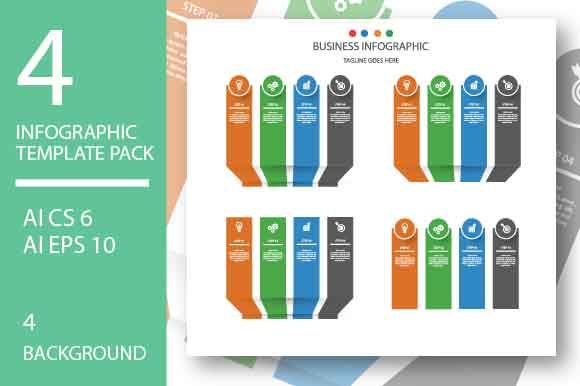
When comparing design resources, the file format is often the most significant differentiator between a professional tool and a limited graphic. The Infographic Template with 6 Style discussed here is built on a robust technical foundation, typically delivered in AI CS6 and AI EPS10 formats. These are not merely image files; they are vector-based instructions that allow for infinite scalability without loss of quality.
For users familiar with Adobe Illustrator, the inclusion of AI CS6 compatibility ensures that the files can be opened and edited on a wide range of software versions, bridging the gap between legacy systems and current creative clouds. The EPS10 format serves as a universal standard, allowing these vectors to be imported into other vector editing software beyond the Adobe ecosystem. This openness is crucial for teams that may utilize diverse toolsets.
The presence of 100 AI and EPS vectors within these packages signifies a high density of usable assets. Unlike raster-based templates (such as PSD or JPEG) where resizing elements often results in pixelation, these vector elements remain crisp whether they are scaled down for a mobile screen or enlarged for a trade show banner. This technical flexibility directly impacts the longevity and utility of the purchase.
Evaluating Versatility: Print vs. Digital Applications
A common dilemma for content creators is choosing between assets optimized for print and those designed for the web. Many templates excel in one area but fail in the other due to resolution constraints or color mode mismatches (CMYK vs. RGB). A comprehensive Infographic Template with 6 Style resolves this conflict by offering elements that are inherently resolution-independent.
For print design works such as posters, brochures, and annual reports, the vector nature of these files ensures that text remains sharp and lines stay clean, regardless of the printing press specifications. The ability to edit every node and curve in Adobe Illustrator means that branding guidelines regarding stroke weight and font sizing can be strictly adhered to.
Conversely, the same files are highly effective for web and mobile sites. Because the content can be measured and resized easily, designers can export specific sections as lightweight PNG or JPEG files optimized for fast loading times. Furthermore, because the original source files are vectors, creating responsive variations for different screen sizes becomes a streamlined process rather than a redesign effort. This dual-purpose capability makes the six-style template a more cost-effective solution than buying separate print and digital asset packs.
Comparative Analysis: Multi-Style Packs vs. Single-Theme Tools
When researching options, it is helpful to compare the Infographic Template with 6 Style against other categories of design resources, such as drag-and-drop online builders or single-niche template bundles.
- Online Drag-and-Drop Builders: These platforms offer ease of use but often limit creative control. Users are confined to pre-set grids and limited icon libraries. In contrast, the AI/EPS vector files provide 100% editability, allowing for custom layouts that break the mold of standard templates.
- Single-Theme Bundles: Purchasing a "Medical Icon Pack" or a "Finance Chart Set" provides depth in one area but lacks breadth. If a project requires shifting from a medical theme to a general educational style, the user must purchase a new bundle. The six-style approach mitigates this by offering variety upfront, reducing the need for multiple transactions.
- Custom Illustration: Hiring a designer for custom infographics yields unique results but comes with high costs and long turnaround times. Using a high-quality, editable template serves as a pragmatic middle ground, offering professional aesthetics with immediate availability.
The tradeoff here is primarily time versus customization. While online tools are faster for non-designers, the Infographic Template with 6 Style requires a basic proficiency in vector software. However, the return on investment is a significantly higher ceiling for design quality and brand alignment.
Integration with Presentation Software
Beyond static web and print media, these graphics are increasingly vital for dynamic presentations. The elements found in these vector packs are particularly useful for PowerPoint templates. By importing vector shapes directly into presentation software (often via EMF/WMF conversion or copy-paste from Illustrator), presenters can maintain high-definition visuals on large projection screens.
This integration allows for animated sequences where individual chart bars or process steps can be highlighted sequentially. Since the elements are discrete vectors rather than flattened images, they can be manipulated within the presentation environment to suit the flow of the narrative. This flexibility is often missing in standard stock photo subscriptions, which usually provide only flattened raster images unsuitable for slide animation.
Decision Factors: Is This Resource Right for You?
Determining whether to invest in a multi-style infographic template depends on several practical factors related to your workflow and output needs.
Choose the Infographic Template with 6 Style if:
- You require a consistent yet varied visual identity across different types of content (e.g., a serious whitepaper and a fun social media post).
- You have access to vector editing software like Adobe Illustrator and possess the skills to modify anchor points and paths.
- Your projects span both print and digital mediums, requiring assets that scale without degradation.
- You need to export files into various formats (PNG, JPEG, SVG) frequently and want a master file that supports all conversions.
Consider alternative options if:
- You have zero experience with design software and prefer a purely browser-based, click-to-edit interface.
- Your project requires highly specific, custom-drawn characters or illustrations that do not fit within standard geometric or iconographic styles.
- You only need a single graphic for a one-time event and do not anticipate needing a library of reusable elements.
Maximizing the Value of Editable Vectors
To truly leverage the Infographic Template with 6 Style, users should approach the files as a construction kit rather than a finished product. The inclusion of 100 AI and EPS vectors means there is a substantial library of charts, icons, arrows, and containers available. The most effective strategy involves mixing elements from different styles within the pack to create a hybrid look that feels bespoke.
For instance, one might utilize the color palette and typography from one of the six styles while adopting the iconography from another to better suit a specific brand guideline. Because the files are fully editable, changing colors to match corporate branding is a matter of updating global swatches rather than manually recoloring hundreds of objects. This efficiency is a key advantage over raster-based alternatives.
Furthermore, the ability to export into PNG and JPEG formats ensures compatibility with content management systems (CMS) and email marketing platforms that do not support vector uploads. The workflow typically involves designing in the high-fidelity vector environment, refining the layout, and then exporting optimized raster versions for final deployment. This ensures that the end-user sees a polished, professional graphic, while the creator retains the flexible source file for future updates.
In conclusion, the Infographic Template with 6 Style represents a strategic choice for professionals who value flexibility, quality, and cross-medium compatibility. By offering a blend of diverse aesthetics backed by industry-standard vector formats, it addresses the common pain points of scalability and adaptation. While it demands a certain level of technical proficiency, the resulting ability to produce high-quality visuals for print, web, and presentations makes it a superior option for those seeking long-term utility in their design toolkit.