Elevating Digital Interfaces with Voice Recognition Flat Illustration
The way we interact with technology has shifted dramatically in recent years. We have moved from tapping and typing to speaking and listening. This evolution in user behavior demands a parallel evolution in how we visually communicate these technologies. Enter the Voice Recognition Flat Illustration, a design asset that bridges the gap between complex biometric concepts and user-friendly interfaces. As digital voice assistants and security identification systems become staples in our daily lives, the need for clear, scalable, and modern visual representations has never been more critical for designers, marketers, and business owners alike.
In the current digital landscape, first impressions are often formed within milliseconds. A landing page featuring a cluttered or outdated graphic can deter a potential user before they even read the headline. Conversely, a clean, flat vector illustration depicting a person using a smartphone for voice security or assistant commands instantly conveys professionalism and technological fluency. These illustrations are not merely decorative; they are functional tools that guide user understanding and enhance the overall aesthetic of web graphics, mobile applications, and marketing banners.
The Shift Toward Visual Clarity in Tech Design
The trend toward flat design is not just an aesthetic preference; it is a response to the changing habits of modern users. Today's audience consumes content primarily on mobile devices, where screen real estate is limited and load speeds are paramount. Complex, skeuomorphic designs that mimic real-world textures can slow down websites and confuse users on smaller screens. A Voice Recognition Flat Illustration solves this by stripping away unnecessary details to focus on the core message: the interaction between human and machine.
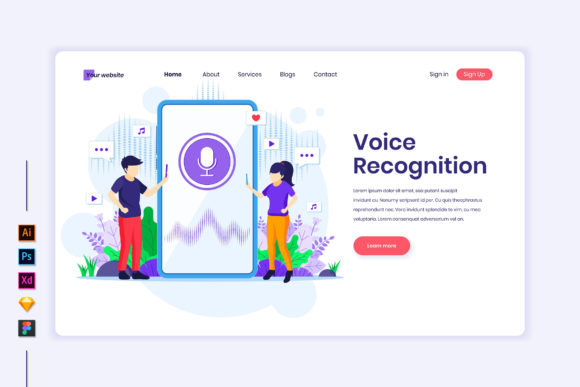
Consider the concept of voice security identification. It is an abstract process involving sound waves, algorithms, and data verification. Explaining this through text alone can be dry and intimidating. However, a well-crafted vector image showing a user confidently speaking into a smartphone, with stylized sound waves indicating secure access, makes the technology feel approachable and safe. This visual shorthand is essential for businesses trying to adopt new technologies without alienating their customer base. It translates high-tech functionality into a relatable human experience.
Furthermore, the versatility of flat vector art aligns perfectly with the dynamic needs of modern workflows. Whether you are designing a hero image for a SaaS platform, an infographic for a tech blog, or a banner for a mobile app store, consistency is key. Using a unified illustration style ensures that your brand looks cohesive across all touchpoints. The ability to resize these elements without losing quality means that a single asset can serve multiple purposes, from a tiny favicon to a massive billboard display, maintaining crisp edges and vibrant colors at every scale.
Practical Applications for Creators and Entrepreneurs
For freelancers, agencies, and in-house design teams, the utility of a comprehensive design template cannot be overstated. A high-quality package that includes a Voice Recognition Flat Illustration offers immediate value by reducing production time. Instead of starting from scratch or searching for disjointed assets that don't match, creators can utilize a fully editable source file to customize the scene to their specific project needs.
Imagine a startup launching a new digital voice assistant. They need a landing page that screams innovation. By leveraging a template that features people using smartphones in various contexts—such as setting reminders, making calls, or verifying identity—they can rapidly prototype and deploy a professional-looking site. The fact that these elements are 100% vector means that the text within the illustration can be changed to match the brand's voice, and colors can be adjusted to align with corporate identity guidelines instantly.
The practical implications extend beyond just web design. Educators creating presentations on AI trends, marketers developing social media campaigns, and product managers sketching out user flows can all benefit from these assets. The clarity of flat illustration helps in explaining complex workflows to stakeholders who may not be tech-savvy. It serves as a universal language that simplifies the narrative around digital transformation.
- Web Graphics: Enhance user engagement on homepages and feature sections.
- Mobile Web: Ensure fast loading times and crisp visuals on all device sizes.
- Landing Pages: Increase conversion rates with clear, compelling visual storytelling.
- Banners and Ads: Create eye-catching promotional materials that stand out in crowded feeds.
- Infographics: Break down technical processes into easy-to-understand visual steps.
The Technical Advantage of Vector Scalability
One of the most significant challenges in digital design is maintaining image quality across different resolutions. Raster images, such as standard JPEGs or PNGs, can become pixelated when enlarged, leading to a poor user experience and a perception of low quality. This is where the superiority of vector formats shines. A Voice Recognition Flat Illustration built on vector mathematics allows for infinite scalability. You can stretch the image to fit a 4K monitor or shrink it for a smartwatch interface, and the lines will remain perfectly smooth.
This technical flexibility is crucial for future-proofing your design assets. As display technologies evolve and screen densities increase, having a library of vector-based illustrations ensures that your content remains sharp and professional. For business owners and entrepreneurs, this means investing once in a high-quality asset that serves the company for years, adapting to new platforms and mediums without the need for constant recreation.
Moreover, the editability of these files empowers non-designers to make minor adjustments. With access to source files like Adobe Illustrator (.Ai) or editable formats in Figma and Adobe XD, marketing teams can tweak colors to match seasonal campaigns or update text to reflect new features without needing to hire a designer for every small change. This autonomy speeds up time-to-market and allows for greater agility in responding to market trends.
Integration into Modern Design Workflows
The modern creative ecosystem is diverse, with professionals using a variety of tools to bring their visions to life. A robust design template acknowledges this diversity by providing files in multiple formats. Whether your team works primarily in Adobe Photoshop for raster effects, Adobe XD for prototyping, Figma for collaborative interface design, or needs universal formats like EPS10, PDF, and SVG for print and web, having all these options in one package streamlines the workflow.
For instance, a UI/UX designer might import the SVG file directly into Figma to integrate the voice recognition character into a mobile app mockup. Meanwhile, a print designer could use the EPS10 file to create a brochure explaining voice security features for a corporate client. The inclusion of high-resolution PNG and JPG files at 300 DPI ensures that these assets are also ready for immediate use in presentations or documents where editing is not required.
This level of organization reflects a deep understanding of professional needs. Well-organized layers and groups within the source files mean that designers can isolate specific elements—such as the smartphone, the user, or the sound wave graphics—and animate them or rearrange them to suit unique layout requirements. This modularity encourages creativity and experimentation, allowing creators to push the boundaries of standard template usage.
Meeting User Expectations in the Age of AI
As artificial intelligence and voice technology become ubiquitous, user expectations regarding interface design have risen. Users expect seamless, intuitive, and visually appealing experiences. They are less tolerant of clunky interfaces or generic stock photography that feels disconnected from the product. A tailored Voice Recognition Flat Illustration signals that a brand pays attention to detail and understands the nuances of the technology it presents.
When users see an illustration that accurately depicts the action of voice identification—perhaps showing a subtle glow around the phone or a clear visualization of the voice print—they feel more confident in the security and reliability of the system. This psychological impact is vital for adoption. In sectors like banking, healthcare, and smart home automation, where trust is paramount, the right visual cue can be the difference between a user proceeding with verification or abandoning the process.
Additionally, the inclusive nature of flat illustration allows for diverse representation. Designers can easily modify skin tones, clothing, and settings to ensure that the imagery resonates with a global audience. This adaptability is essential for brands aiming to connect with diverse demographics and foster a sense of belonging among their users.
Conclusion: A Strategic Asset for Digital Growth
In summary, the integration of a high-quality Voice Recognition Flat Illustration into your design toolkit is more than just an aesthetic choice; it is a strategic move towards clearer communication and enhanced user engagement. As we continue to rely on voice assistants and biometric security, the visual language we use to describe these technologies must evolve to match their sophistication and simplicity.
For professionals ranging from web developers to marketing strategists, having access to fully editable, scalable, and versatile vector assets provides a competitive edge. It allows for rapid deployment of high-quality visuals that resonate with modern audiences and stand the test of time across various platforms. By embracing these design resources, creators can focus less on the mechanics of asset creation and more on the storytelling and strategy that drive business growth.
Whether you are building the next great app, redesigning a corporate website, or crafting an educational resource, the right illustration can elevate your project. The availability of comprehensive file formats—from .Ai and .psd to .fig and .svg—ensures that no matter your preferred workflow, you have the tools necessary to succeed. Embrace the clarity and flexibility of flat vector design to meet the demands of today's digital world and prepare for the innovations of tomorrow.