Accelerating Your Launch: Integrating Business Startup Flat Illustrations into Modern Workflows
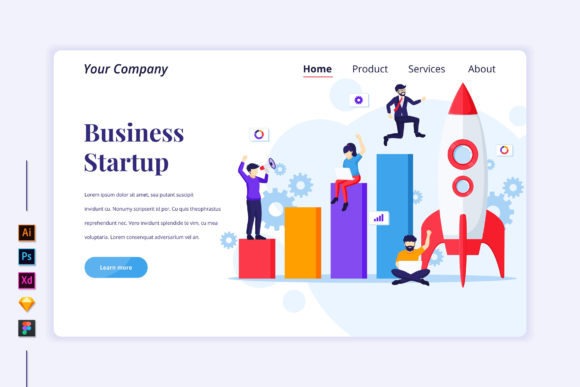
In the fast-paced ecosystem of digital product development, visual communication often dictates the speed at which an audience understands your value proposition. A Business Startup Flat Illustration is not merely a decorative element; it is a strategic asset designed to convey momentum, ambition, and clarity. Specifically, concepts featuring a businessman running toward a rocket symbolize the critical transition from planning to execution—a narrative every entrepreneur needs to tell. When integrating such assets into a landing page or marketing campaign, the focus must shift from simple aesthetics to functional implementation within a broader design workflow.
The modern creative process demands resources that are versatile, scalable, and easy to manipulate. This is where high-quality vector templates become indispensable. Unlike raster images that degrade upon resizing, a 100% vector-based illustration ensures that your visual identity remains crisp across every touchpoint, from a mobile web banner to a large-format trade show infographic. Understanding how to leverage these files effectively can streamline your production timeline and enhance the professional quality of your output.
The Strategic Role of Visual Metaphors in Landing Pages
A landing page serves as the digital front door for a startup. Its primary function is conversion, and every element on the page must contribute to that goal. The imagery of a businessman sprinting toward a launching rocket acts as a powerful psychological trigger. It visually communicates urgency, growth, and the tangible result of hard work. When a visitor lands on your site, they subconsciously process this imagery before reading a single word of copy. If the illustration aligns with your brand message, it reduces cognitive load and accelerates trust.
Integrating a Business Startup Flat Illustration into your hero section requires more than just dropping a file into your layout. It involves considering the user journey. Before the project begins, you should identify the specific emotion or action you want to evoke. Is the goal to inspire investors? To motivate potential employees? Or to assure customers that your platform will help them scale? Once the objective is clear, the illustration becomes a tool for storytelling. During the design phase, this asset interacts directly with your typography and color palette. Because flat design relies on bold shapes and clean lines, it pairs exceptionally well with modern sans-serif fonts and vibrant, contrasting colors, creating a cohesive visual hierarchy.
Technical Advantages of Vector-Based Assets
The backbone of any efficient design workflow is file compatibility and scalability. When selecting assets for a business project, the format matters immensely. A template provided as a 100% vector source file offers distinct advantages over standard stock photography or low-resolution graphics. The ability to resize elements without losing quality is crucial for responsive web design. A graphic that looks perfect on a desktop monitor must remain sharp on a retina display or a small smartphone screen. Vector formats like SVG, EPS10, and AI ensure that edges remain defined regardless of the zoom level.
Furthermore, editability is a key factor in maintaining brand consistency. A high-quality download package typically includes Adobe Illustrator (.Ai), Photoshop (.psd), Adobe XD (.xd), Sketch (.sketch), and Figma (.fig) files. This multi-format approach acknowledges that different teams use different tools. A marketing team might prefer Figma for rapid prototyping, while a professional illustrator might require the deep editing capabilities of Illustrator. Having access to fully editable text and color layers means you can adapt the "businessman" character to wear your company's branded attire or change the rocket's color to match your logo. This level of customization transforms a generic stock image into a bespoke brand asset.
Workflow Integration: From Concept to Deployment
To maximize the utility of a Business Startup Flat Illustration, it should be viewed as a modular component within your larger content strategy. Here is how these assets fit into various stages of a project lifecycle:
- Pre-Production Planning: Before opening your design software, map out where the illustration will live. Will it be the hero image? A background element? Or part of an infographic explaining your service tiers? Knowing the placement helps you decide which file format to open first. For web use, SVG is often ideal for performance, while PNG at 300 DPI is better for static social media banners.
- Customization and Branding: Open the source file in your preferred editor (e.g., Adobe Illustrator or Figma). Utilize the well-organized layers to isolate specific elements. Change the color palette to align with your brand guidelines. If the template includes editable text, insert your unique value proposition directly into the artwork if it serves as a standalone graphic.
- Cross-Platform Adaptation: Once the master file is customized, export variations for different channels. Use the vector data to create a lightweight version for mobile web loading speeds and a high-resolution JPG or PDF for print collateral like pitch decks or brochures. The scalability of the vector ensures you do not need to recreate the image for each medium.
- Quality Control: Before final deployment, review the illustration on multiple devices. Ensure that the "flat" style translates well on dark modes or light modes depending on your site's theme. Check that the metaphor of the rocket launch does not clash with other interactive elements on the page.
Enhancing Efficiency with Organized File Structures
Time is a scarce resource for entrepreneurs and freelancers. A disorganized asset library can lead to hours of wasted time searching for the right layer or font. Professional templates, such as those offered by studios like agnyhasyastudio, prioritize file organization. When files are logically grouped—separating background elements, characters, and foreground objects—you can iterate designs rapidly. This structure supports an agile workflow where changes can be made on the fly based on stakeholder feedback.
Moreover, having access to a comprehensive suite of formats (.Ai, .psd, .xd, .sketch, .fig, EPS, PDF, SVG, PNG, JPG) eliminates the friction of file conversion. You do not need to rely on third-party converters that might corrupt data or flatten layers. Instead, you can hand off the .fig file to your UI designer and the .pdf to your printer simultaneously, ensuring everyone is working from the same visual truth. This interoperability reduces errors and maintains consistency across all deliverables.
Long-Term Value and Reusability
Investing in high-quality, editable illustrations pays dividends beyond the initial launch. As your business evolves, your messaging may shift, but the core visual metaphor of growth and ambition often remains relevant. Because the elements are vector-based and separated, you can repurpose the "rocket" for a future campaign about a new product feature or use the "running businessman" in an internal presentation about team goals. The longevity of vector art means you are building a library of assets that grows in value over time, rather than a collection of disposable images.
In educational contexts or corporate training materials, these illustrations serve as clear, distraction-free visuals that help explain complex processes. The simplicity of flat design removes unnecessary detail, allowing the viewer to focus on the concept being taught. Whether used in a slide deck, an e-learning module, or a whitepaper, the clarity of the vector lines ensures readability even when projected on large screens or printed in black and white.
Conclusion: Elevating Your Visual Strategy
The decision to use a Business Startup Flat Illustration is a decision to prioritize clarity, scalability, and professional polish. In a digital landscape saturated with generic imagery, customizing a high-quality vector template allows you to stand out while maintaining efficiency. By understanding the technical benefits of vector formats and integrating them thoughtfully into your workflow, you transform a simple graphic into a dynamic engine for communication. Whether you are a solo freelancer building a portfolio or a marketing team launching a new venture, the right visual assets bridge the gap between your current status and your ultimate goals—much like the businessman reaching for his rocket.
Ultimately, the success of your landing page or marketing campaign hinges on the seamless integration of form and function. With fully editable, multi-format vector files, you have the flexibility to adapt, scale, and refine your visual narrative as your business grows. Embrace these tools not just as decorations, but as fundamental components of your strategic planning and execution process.